Pre-Production
During the pre-production stage, the main focus was developing the concept and planning the entire project before animating. The idea was to create a Christmas-themed stop motion animation that reflected the identity of BYU–Idaho. We decided to use a snowman and a BYU–Idaho sign as the place and object of interest in our short film. In here, I jumped to Photoshop to have a concept of what I imagined and after a little while, I came up with the design of the set we ended up using.

We started by developing the story and overall concept, making sure the message and tone were clear. From there, a storyboard was created, sketching out each shot to plan the camera angles, movement, and pacing. This step was essential because in stop motion, changes during production can be very time-consuming. Then we analyzed the shots and decided how we would film each scene.


We also planned the characters and materials. We decided to use felt to build the models because it’s a material that allows the characters to be cute. Technical decisions were made ahead of time, such as the frame rate (12fps), and camera setup, to ensure consistency throughout the animation. Pre-production helped to the planning on this tight deadline we had. It helped minimize problems later and allowed the production stage to run more smoothly, because we knew how many shots we had to make in each setup up so we are not moving every asset every time we start a scene.
We started creating the assets that we see on screen; ALL assets were created by us.
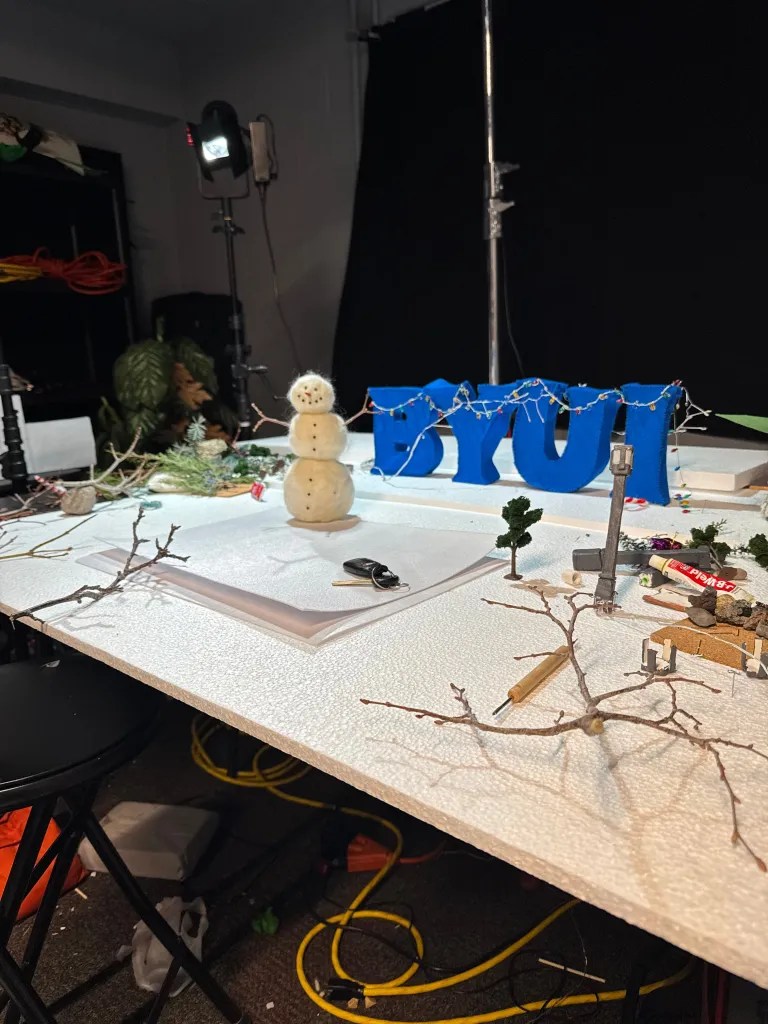


Production
The production phase focused on bringing the plan to life, which meant following the stop motion process… this is having the character set up and to moving it slightly and then taking a picture, we did this about 1500 times through the whole production. The set was carefully arranged, and consistent lighting was used to avoid flickering or changes between shots. The camera was secured on a tripod to maintain continuity. For this part of the project, we also used Dragon Frame, which is the software that LAIKA uses for their projects. Learning this program was cool; we were able to apply the lines of movement to have a guide while we animate. By the end of the project, I felt very proficient in it.
Each character movement was created by making small, precise adjustments between every frame, which required patience and attention to detail. One of the biggest challenges during production was maintaining consistency in character positioning and set elements, especially when, by accident, a character was moved in a way we did not want. There were three times where, to match the pose that the character had before, we spent an hour trying to match it and not lose the progress we had made.
There were moments where we had to adjust or simplify shots from the storyboard due to time constraints and technical limitations. There were some movements that were simply impossible with the equipment we have, but we worked to preserve the original idea of the story. This stage reinforced the importance of organization, discipline, and problem-solving in stop motion animation.
Post-Production
In post-production, all the captured frames were exported as JPEGS and imported into a sequence to assemble the final animation. The first step was organizing the footage and masking the arm we used to maintain the position of the characters. We knew we were going to make this from pre-production. Because of this, we got clean plates of the parts that the arm was covering, so later in post, we could easily get rid of the stop motion arm.


DaVinci Resolve was used for editing and color correction to ensure visual consistency across all shots. The project was then brought into After Effects for final adjustments, added effects, and an intro and an outro. I did the motion design of this part of the project.


Finally, music and sound design were added and synchronized with the animation to give the characters more life and complete the story. Post-production was essential in polishing the project and making it feel finished and professional. For this, we recorded some sounds and used some pre-recorded sounds. I did the mix of this part, aligning everything with each movement and expression of the characters.

So how did it go? You can watch the final result right here ◡̈