
Hello! My name is Juliana Pereira, and this project is all about editing. With the help of my classmates and their brilliant minds, we came up with the idea of making a documentary about the controversies around the East Idaho Aquarium, and because we decided to do that, I had the opportunity to be the editor. From location scouting and preparing questions to organizing files and assembly cuts during the post-production phase, I wanted to learn how to help my team as an editor in all three phases of production and not just offer another point of view. I wanted to know, “What can I do to be essential to this production?” but also, “How does this prepare me to be a high-quality editor in the future?”

Why video editor and why this project?
I wanted to work on something that would take me out of my comfort zone. I wanted to learn how to be a better storyteller. This factual film is the perfect tool I found to be able to do that. I wanted to learn how to transmit emotion, but also how to make people want more. I wanted to learn how to implement the “less is more” technique. Being a video editor allows me to learn all these things but also helps me become a better storyteller.
During post-production, video editors, with the guidance of directors, have the chance to put in or add whatever they think will make the story a hook for their target audience. This role has helped me understand this concept better. It’s just like making a cake: you have all the ingredients, and when all the ingredients (shots) are combined in the perfect way, magic happens. That’s why I chose this project and this role—so I can be the chef of this story.
Process
Most people think that being a video editor only starts in Post Production, but there’s so much more we can assist, and that’s exactly what I learned.
Pre Production
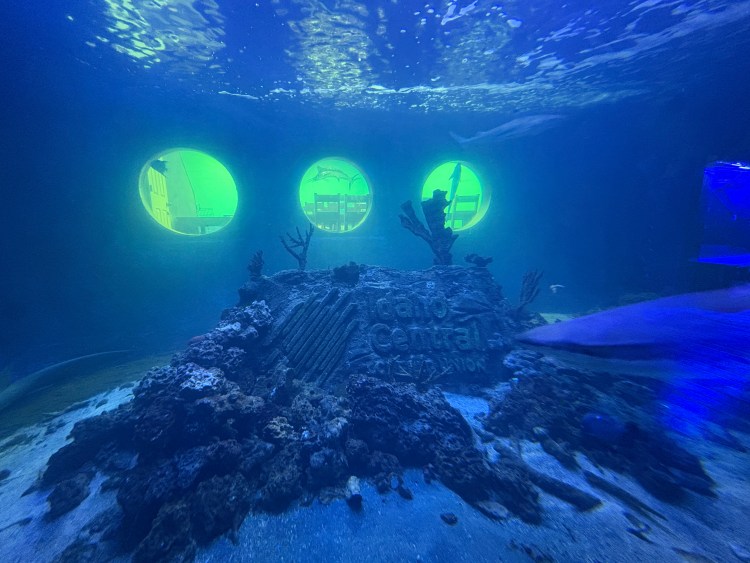
In order to make a good story, we need a good location and in this case, good questions. We started by scouting the aquarium to know which place would be better to film, and with better lighting. We realized that inside of the aquarium would be too hard to edit, and apply color correction/grading, but also it would become a nightmare to edit sound because of the water sounds and birds.
First location (Not the chosen one for interviews)

Second location (Used for interview)
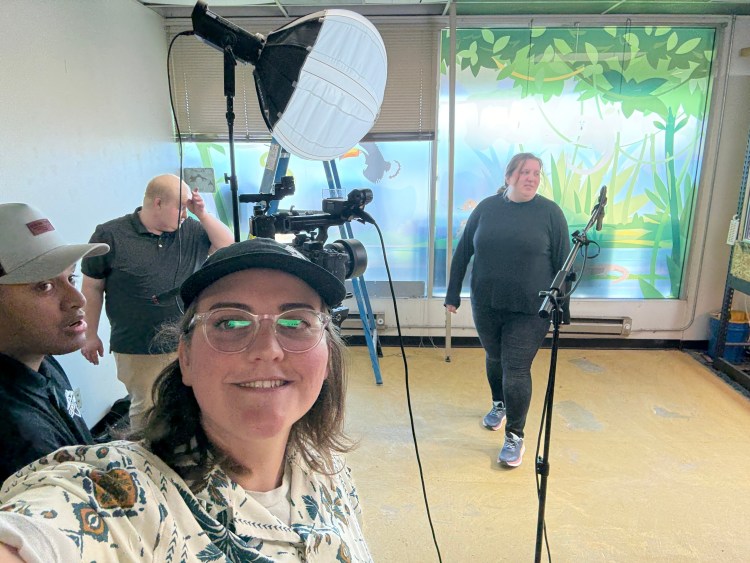
We decided that this one has better lighting and more reserved. This area it’s a new place they are building for reptiles and it was the perfect place for the interviews.
Now referring to helping with the questions, like my mom says: “You ask a dumb question, you receive a dumb answer”. With that in mind, we wanted to make sure we had the right questions. It was a team effort but I am happy with my contribution.
The questions

In the end, being able to participate in the pre production gave me a different perspective of things I can do to help but also to start thinking ahead of time before editing.
Production
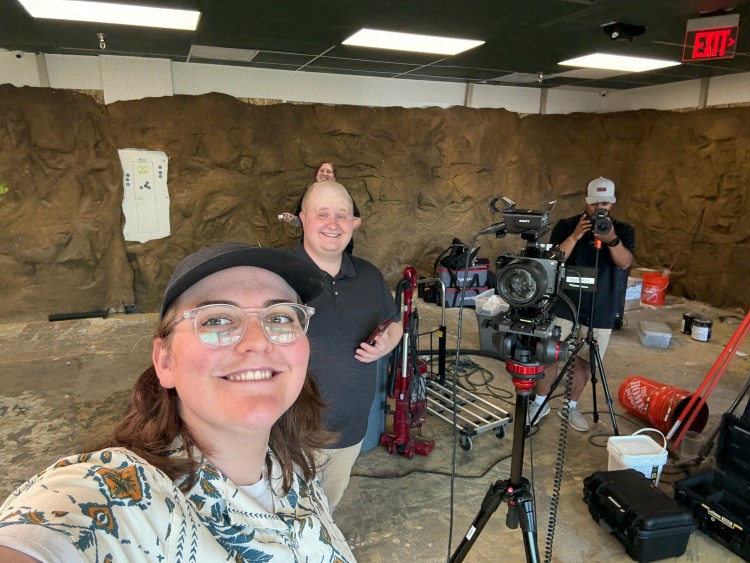
During production, I made sure that I paid attention to what was being said, which was perfect because I was helping with audio—and that’s the best way to detect anything that might not sound good during post-production. During one of the interviews, one of the workers said, “No, that’s not true,” but I made sure she rephrased it to what she really meant, which was, “No, we do not hurt our fish,” so people could understand the context of what she was talking about.
Post-Production
Step number one: make sure I have the footage and that it’s not accidentally deleted or lost. After that, I created folders for each corresponding file.
Example:

This is helping me not get lost during editing, and helps me keep my project organized. Something else that helps during editing it’s to have different timelines.
Example:

Using different timelines helps me keep track of everything the team says without having to delete anything or rewatch footage to find specific moments. By having a dedicated worker’s timeline with all the raw cuts and conversations, and then moving the selects into the assembly cut, I can easily locate each moment and understand the context of what’s being discussed.
The assembly cut and rough cut are still in progress, but you can follow our Instagram page @murkywater_shortfilm for the latest updates on our short film. Murky Waters will also be screened at the Cineburg in the Spori Building at BYU–Idaho on July 17th. More details about the schedule will be posted on our Instagram page.

Challenges
I believe the biggest challenge is making sure I’m telling a good story. I’ve learned that just because something makes sense to me, doesn’t mean it will make sense to everyone else. I realized I spent so much time editing the footage that I know exactly what the interviewees are talking about—and sometimes, in trying to follow the “less is more” approach, I end up cutting things that are actually necessary for the audience to understand the full context.
Conclusion
This documentary is more than just an editing assignment—it’s a real-world lesson in teamwork, storytelling, and problem-solving. From pre-production to post-production, I learned that a great editor does more than cut footage—they think ahead, communicate clearly, and make sure every piece of the story fits with purpose. This experience helped me grow, and now I know that editing isn’t just what I do—it’s who I am.
Thank you for your time!
